


Past Stern Center Fellows
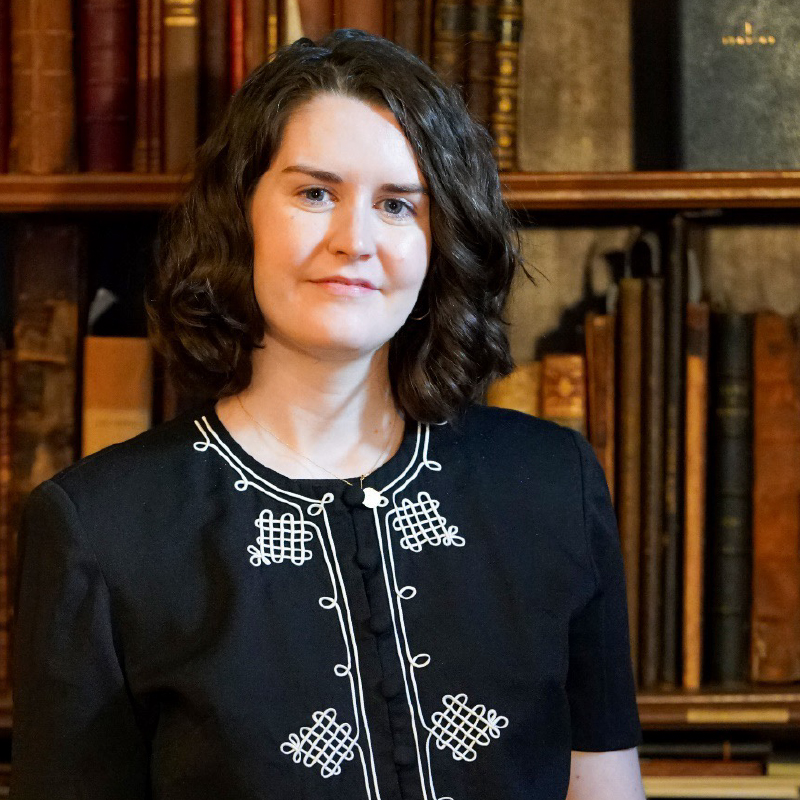
Isabelle Avci
2025-26 Stern Center Curatorial Fellow
Ph.D. Candidate, Department of History Johns Hopkins University
Email: iavci1@jhu.edu
Isabelle Avci works at the interstices of early modern intellectual and cultural history in western Europe especially on the relationship between political and religious thought from the Renaissance through the Reformation. She is developing a dissertation centered on the formation of the British Empire during the second half of the seventeenth century.
Her project explores the intellectual consequences of different accounts of consciousness, especially of dreams and visions in an age of prophecy and apocalyptic literature, on notions of the liberty of conscience. She explores both the intellectual traditions that support radical religious language as well as the cultural context of empire and the changes “discovery” and imperial conquest make for the meaning of mobility.
While at the Stern Center, she has been interested in situating these themes within a wider European context and global imaginary in which Roman Catholicism and Ottoman Islam were also major cultural forces.
Isabelle Avci’s Curatorial Fellowship was generously funded by Harriett Long.
Isabelle Avci
2025-26 Stern Center Curatorial Fellow
Ph.D. Candidate, Department of History Johns Hopkins University
Email: iavci1@jhu.edu
Isabelle Avci works at the interstices of early modern intellectual and cultural history in western Europe especially on the relationship between political and religious thought from the Renaissance through the Reformation. She is developing a dissertation centered on the formation of the British Empire during the second half of the seventeenth century.
Her project explores the intellectual consequences of different accounts of consciousness, especially of dreams and visions in an age of prophecy and apocalyptic literature, on notions of the liberty of conscience. She explores both the intellectual traditions that support radical religious language as well as the cultural context of empire and the changes “discovery” and imperial conquest make for the meaning of mobility.
While at the Stern Center, she has been interested in situating these themes within a wider European context and global imaginary in which Roman Catholicism and Ottoman Islam were also major cultural forces.
Isabelle Avci’s Curatorial Fellowship was generously funded by Harriett Long.
Isabelle Avci
2025-26 Stern Center Curatorial Fellow
Ph.D. Candidate, Department of History Johns Hopkins University
Email: iavci1@jhu.edu
Isabelle Avci works at the interstices of early modern intellectual and cultural history in western Europe especially on the relationship between political and religious thought from the Renaissance through the Reformation. She is developing a dissertation centered on the formation of the British Empire during the second half of the seventeenth century.
Her project explores the intellectual consequences of different accounts of consciousness, especially of dreams and visions in an age of prophecy and apocalyptic literature, on notions of the liberty of conscience. She explores both the intellectual traditions that support radical religious language as well as the cultural context of empire and the changes “discovery” and imperial conquest make for the meaning of mobility.
While at the Stern Center, she has been interested in situating these themes within a wider European context and global imaginary in which Roman Catholicism and Ottoman Islam were also major cultural forces.
Isabelle Avci’s Curatorial Fellowship was generously funded by Harriett Long.

Sandro la Barbera
2024-25 Stern Center/RSA Visiting Fellow
Ph.D., Scuola Normale Superiore, Pisa
E-mail: sandro.labarbera@unitn.it
Sandro La Barbera is an Associate Professor of Classics in the Department of Humanities at the University of Trento, Italy. His prior research and teaching positions include the Ludwig Boltzmann Institute for Neo-Latin Studies in Innsbruck, Austria and Georgetown University in Washington D.C. At Trento he teaches undergraduate courses and graduate seminars on the languages, literary corpora, and cultural transmission of the so-called “Classical” canon from antiquity to the modern age. His research interests include: Greek literature, especially Hellenistic; Roman verse, especially from the late Republic and the early Empire; textual criticism, paleography, and the manuscript and print transmission of Classical texts; Renaissance Neo-Latin poetry; historical and theoretical interactions between music, literature, the visual arts, and the hard sciences; and literary forgeries and issues of authorship and authenticity.
His most recent research project has focused on the creation, transmission, and reception of pseudepigrapha in Roman culture. Forthcoming are his new critical edition of the pseudo-Vergilian Culex, and a monograph on Pietro Bembo’s 1530 edition of the Culex. Professor La Barbera is founder and Principal Investigator of the intercollegiate project FALSVM – Forging Authorship in Literature, Scholarship, and Visual Media, for which he has received a grant from Italy’s Ministry of University and Research (PRIN 2022 Scheme) to produce original scholarship, organize seminars and conferences, and publish an interdisciplinary online journal on forgery, authenticity, and related issues.
Sandro la Barbera
2024-25 Stern Center/RSA Visiting Fellow
Ph.D., Scuola Normale Superiore, Pisa
E-mail: sandro.labarbera@unitn.it
Sandro La Barbera is an Associate Professor of Classics in the Department of Humanities at the University of Trento, Italy. His prior research and teaching positions include the Ludwig Boltzmann Institute for Neo-Latin Studies in Innsbruck, Austria and Georgetown University in Washington D.C. At Trento he teaches undergraduate courses and graduate seminars on the languages, literary corpora, and cultural transmission of the so-called “Classical” canon from antiquity to the modern age. His research interests include: Greek literature, especially Hellenistic; Roman verse, especially from the late Republic and the early Empire; textual criticism, paleography, and the manuscript and print transmission of Classical texts; Renaissance Neo-Latin poetry; historical and theoretical interactions between music, literature, the visual arts, and the hard sciences; and literary forgeries and issues of authorship and authenticity.
His most recent research project has focused on the creation, transmission, and reception of pseudepigrapha in Roman culture. Forthcoming are his new critical edition of the pseudo-Vergilian Culex, and a monograph on Pietro Bembo’s 1530 edition of the Culex. Professor La Barbera is founder and Principal Investigator of the intercollegiate project FALSVM – Forging Authorship in Literature, Scholarship, and Visual Media, for which he has received a grant from Italy’s Ministry of University and Research (PRIN 2022 Scheme) to produce original scholarship, organize seminars and conferences, and publish an interdisciplinary online journal on forgery, authenticity, and related issues.
Sandro la Barbera
2024-25 Stern Center/RSA Visiting Fellow
Ph.D., Scuola Normale Superiore, Pisa
E-mail: sandro.labarbera@unitn.it
Sandro La Barbera is an Associate Professor of Classics in the Department of Humanities at the University of Trento, Italy. His prior research and teaching positions include the Ludwig Boltzmann Institute for Neo-Latin Studies in Innsbruck, Austria and Georgetown University in Washington D.C. At Trento he teaches undergraduate courses and graduate seminars on the languages, literary corpora, and cultural transmission of the so-called “Classical” canon from antiquity to the modern age. His research interests include: Greek literature, especially Hellenistic; Roman verse, especially from the late Republic and the early Empire; textual criticism, paleography, and the manuscript and print transmission of Classical texts; Renaissance Neo-Latin poetry; historical and theoretical interactions between music, literature, the visual arts, and the hard sciences; and literary forgeries and issues of authorship and authenticity.
His most recent research project has focused on the creation, transmission, and reception of pseudepigrapha in Roman culture. Forthcoming are his new critical edition of the pseudo-Vergilian Culex, and a monograph on Pietro Bembo’s 1530 edition of the Culex. Professor La Barbera is founder and Principal Investigator of the intercollegiate project FALSVM – Forging Authorship in Literature, Scholarship, and Visual Media, for which he has received a grant from Italy’s Ministry of University and Research (PRIN 2022 Scheme) to produce original scholarship, organize seminars and conferences, and publish an interdisciplinary online journal on forgery, authenticity, and related issues.

Giulia M. Cipriani
2022-23 Stern Center Curatorial Fellow
Ph.D., Department of Modern Languages and Literatures (Italian Section)
Johns Hopkins University
E-mail: gcipria1@jh.edu
Giulia M. Cipriani earned her BA and MA in Italian Literature at the University of Roma Tre where her research focused on the parodic rewriting of Dante’s Comedy in Boccaccio’s Decameron, portions of which have appeared in the academic journal Scaffale Aperto and other scholarly publications. She has also published essays on Dante’s reception in Petrarch and Boccaccio. At Johns Hopkins, she expanded her interests with research into the so-called petrarchiste marchigiane, attempting to establish their professed female Petrarchan verses to in fact be a literary forgery of the sixteenth century. Her doctoral dissertation focused on demons in Italian epic-chivalric poems from Dante to Marino.
Giulia M. Cipriani
2022-23 Stern Center Curatorial Fellow
Ph.D., Department of Modern Languages and Literatures (Italian Section)
Johns Hopkins University
E-mail: gcipria1@jh.edu
Giulia M. Cipriani earned her BA and MA in Italian Literature at the University of Roma Tre where her research focused on the parodic rewriting of Dante’s Comedy in Boccaccio’s Decameron, portions of which have appeared in the academic journal Scaffale Aperto and other scholarly publications. She has also published essays on Dante’s reception in Petrarch and Boccaccio. At Johns Hopkins, she expanded her interests with research into the so-called petrarchiste marchigiane, attempting to establish their professed female Petrarchan verses to in fact be a literary forgery of the sixteenth century. Her doctoral dissertation focused on demons in Italian epic-chivalric poems from Dante to Marino.
Giulia M. Cipriani
2022-23 Stern Center Curatorial Fellow
Ph.D., Department of Modern Languages and Literatures (Italian Section)
Johns Hopkins University
E-mail: gcipria1@jh.edu
Giulia M. Cipriani earned her BA and MA in Italian Literature at the University of Roma Tre where her research focused on the parodic rewriting of Dante’s Comedy in Boccaccio’s Decameron, portions of which have appeared in the academic journal Scaffale Aperto and other scholarly publications. She has also published essays on Dante’s reception in Petrarch and Boccaccio. At Johns Hopkins, she expanded her interests with research into the so-called petrarchiste marchigiane, attempting to establish their professed female Petrarchan verses to in fact be a literary forgery of the sixteenth century. Her doctoral dissertation focused on demons in Italian epic-chivalric poems from Dante to Marino.

Surekha Davies
2019 Stern Center Visiting Research Fellow
Author, Speaker, and Consultant
Ph.D., The Warburg Institute, University of London
E-mail: surekha.davies@gmail.com
Website
Surekha Davies is a writer, speaker, historian, and academic consultant. She is the author of Renaissance Ethnography and the Invention of the Human: New Worlds, Maps and Monsters (Cambridge University Press, 2016), which won the 2016 Morris D. Forkosch Prize for the best first book in intellectual history and the 2017 Roland H. Bainton Prize in History/Theology, and was a finalist for the 2018 Pickstone Prize for the best scholarly book in the history of science. Her second book, Humans: A Monstrous History, is under contract with the University of California Press as a lead trade-list title. In 2019, she was named the inaugural Stern Center Research Fellow at Virginia Fox Stern Center for the History of the Book, focusing on Richard Eden’s seminal 1555 translation of Peter Martyr’s De orbe nouo, the first systematic attempt to document the New World discovery. Dr. Davies’s work has also been supported by a host of institutional fellowships, including the Folger Shakespeare Library, the John Carter Brown Library, the American Philosophical Society, and the Max Planck Institute for the History of Science among others. Before turning to professional writing full-time in late 2022, she was a historian of science, art, and ideas at Utrecht University in the Netherlands (2019-22); prior to that in 2018 she was awarded tenure and promotion to Associate Professor at Western Connecticut State University. She currently sits on the Board of Directors of the Renaissance Society of America, where she serves as Fellowships Chair.
Surekha Davies
2019 Stern Center Visiting Research Fellow
Author, Speaker, and Consultant
Ph.D., The Warburg Institute, University of London
E-mail: surekha.davies@gmail.com
Website
Surekha Davies is a writer, speaker, historian, and academic consultant. She is the author of Renaissance Ethnography and the Invention of the Human: New Worlds, Maps and Monsters (Cambridge University Press, 2016), which won the 2016 Morris D. Forkosch Prize for the best first book in intellectual history and the 2017 Roland H. Bainton Prize in History/Theology, and was a finalist for the 2018 Pickstone Prize for the best scholarly book in the history of science. Her second book, Humans: A Monstrous History, is under contract with the University of California Press as a lead trade-list title. In 2019, she was named the inaugural Stern Center Research Fellow at Virginia Fox Stern Center for the History of the Book, focusing on Richard Eden’s seminal 1555 translation of Peter Martyr’s De orbe nouo, the first systematic attempt to document the New World discovery. Dr. Davies’s work has also been supported by a host of institutional fellowships, including the Folger Shakespeare Library, the John Carter Brown Library, the American Philosophical Society, and the Max Planck Institute for the History of Science among others. Before turning to professional writing full-time in late 2022, she was a historian of science, art, and ideas at Utrecht University in the Netherlands (2019-22); prior to that in 2018 she was awarded tenure and promotion to Associate Professor at Western Connecticut State University. She currently sits on the Board of Directors of the Renaissance Society of America, where she serves as Fellowships Chair.
Surekha Davies
2019 Stern Center Visiting Research Fellow
Author, Speaker, and Consultant
Ph.D., The Warburg Institute, University of London
E-mail: surekha.davies@gmail.com
Website
Surekha Davies is a writer, speaker, historian, and academic consultant. She is the author of Renaissance Ethnography and the Invention of the Human: New Worlds, Maps and Monsters (Cambridge University Press, 2016), which won the 2016 Morris D. Forkosch Prize for the best first book in intellectual history and the 2017 Roland H. Bainton Prize in History/Theology, and was a finalist for the 2018 Pickstone Prize for the best scholarly book in the history of science. Her second book, Humans: A Monstrous History, is under contract with the University of California Press as a lead trade-list title. In 2019, she was named the inaugural Stern Center Research Fellow at Virginia Fox Stern Center for the History of the Book, focusing on Richard Eden’s seminal 1555 translation of Peter Martyr’s De orbe nouo, the first systematic attempt to document the New World discovery. Dr. Davies’s work has also been supported by a host of institutional fellowships, including the Folger Shakespeare Library, the John Carter Brown Library, the American Philosophical Society, and the Max Planck Institute for the History of Science among others. Before turning to professional writing full-time in late 2022, she was a historian of science, art, and ideas at Utrecht University in the Netherlands (2019-22); prior to that in 2018 she was awarded tenure and promotion to Associate Professor at Western Connecticut State University. She currently sits on the Board of Directors of the Renaissance Society of America, where she serves as Fellowships Chair.

Martina Franzini
2023-24 Stern Center Curatorial Fellow
Ph.D. Candidate, Department of Modern Languages & Literatures, Italian Section
Johns Hopkins University
E-mail: mfranzi2@jh.edu
Martina Franzini’s research focuses on Italian medieval and Renaissance literature. She is particularly interested in the reception of the classical Greek and Latin tradition, and understanding how these fundamental models influence successive literary production. Prior to Johns Hopkins, she earned her BA in Lettere Moderne from the Università degli Studi di Milano in 2015, and then an MA in Italian Studies from Boston College in 2021 with a thesis exploring literary connections between the Latin poet Statius and the poetic and Christian values in Dante’s verse. She is currently working on an ecocritical reading of Dante’s Divine Comedy, analyzing arboreal metaphors throughout the poem.
Martina Franzini’s Curatorial Fellowship had been generously funded by Harriett and Donlin Long.
Martina Franzini
2023-24 Stern Center Curatorial Fellow
Ph.D. Candidate, Department of Modern Languages & Literatures, Italian Section
Johns Hopkins University
E-mail: mfranzi2@jh.edu
Martina Franzini’s research focuses on Italian medieval and Renaissance literature. She is particularly interested in the reception of the classical Greek and Latin tradition, and understanding how these fundamental models influence successive literary production. Prior to Johns Hopkins, she earned her BA in Lettere Moderne from the Università degli Studi di Milano in 2015, and then an MA in Italian Studies from Boston College in 2021 with a thesis exploring literary connections between the Latin poet Statius and the poetic and Christian values in Dante’s verse. She is currently working on an ecocritical reading of Dante’s Divine Comedy, analyzing arboreal metaphors throughout the poem.
Martina Franzini’s Curatorial Fellowship had been generously funded by Harriett and Donlin Long.
Martina Franzini
2023-24 Stern Center Curatorial Fellow
Ph.D. Candidate, Department of Modern Languages & Literatures, Italian Section
Johns Hopkins University
E-mail: mfranzi2@jh.edu
Martina Franzini’s research focuses on Italian medieval and Renaissance literature. She is particularly interested in the reception of the classical Greek and Latin tradition, and understanding how these fundamental models influence successive literary production. Prior to Johns Hopkins, she earned her BA in Lettere Moderne from the Università degli Studi di Milano in 2015, and then an MA in Italian Studies from Boston College in 2021 with a thesis exploring literary connections between the Latin poet Statius and the poetic and Christian values in Dante’s verse. She is currently working on an ecocritical reading of Dante’s Divine Comedy, analyzing arboreal metaphors throughout the poem.
Martina Franzini’s Curatorial Fellowship had been generously funded by Harriett and Donlin Long.

Filip Geaman
2022-23 Stern Center Curatorial Fellow
Ph.D., Department of the History of Science and Technology
Johns Hopkins University
E-mail: fgeaman1@jhu.edu
Filip Geaman’s research explores the history of divination, astrology, and magic during the sixteenth and seventeenth centuries, particularly through its connections to scientific and humanistic interests in the Middle East. His doctoral dissertation focuses on these discourses within the context of long-distance, scholarly correspondence networks circa 1620-1650, with an emphasis on France.
Filip Geaman
2022-23 Stern Center Curatorial Fellow
Ph.D., Department of the History of Science and Technology
Johns Hopkins University
E-mail: fgeaman1@jhu.edu
Filip Geaman’s research explores the history of divination, astrology, and magic during the sixteenth and seventeenth centuries, particularly through its connections to scientific and humanistic interests in the Middle East. His doctoral dissertation focuses on these discourses within the context of long-distance, scholarly correspondence networks circa 1620-1650, with an emphasis on France.
Filip Geaman
2022-23 Stern Center Curatorial Fellow
Ph.D., Department of the History of Science and Technology
Johns Hopkins University
E-mail: fgeaman1@jhu.edu
Filip Geaman’s research explores the history of divination, astrology, and magic during the sixteenth and seventeenth centuries, particularly through its connections to scientific and humanistic interests in the Middle East. His doctoral dissertation focuses on these discourses within the context of long-distance, scholarly correspondence networks circa 1620-1650, with an emphasis on France.

Erin Giffin
2022-23 Stern Center/RSA Visiting Research Fellow
Ph.D., University of Washington, Seattle
E-mail: ecgiffin@icloud.com
Erin Giffin’s research focuses on the cult of the Virgin Mary in Loreto, Italy, and its spread throughout the Catholic world during the early modern period. Her interests also include printed media and devotional ephemera, focusing on pilgrimage souvenirs and lost decorative programs associated with the Loretan shrine in the Basilica della Santa Casa. Her scholarly work has been published in journals such as I Tatti Studies and the Print Quarterly, and has been included in numerous edited essay volumes. Dr. Giffin has recently held fellowships at the Villa I Tatti, the Harvard University Center for Italian Renaissance Studies, and was a contributing researcher to the SACRIMA research group based at Ludwig-Maximilians-Universität in Munich, Germany (2017-21). In Fall 2022, she was awarded a jointly sponsored Renaissance Society of America (RSA) and Stern Center Visiting Research Grant to conduct research on the extensive holdings within the Women of the Book Collection dedicated to the Virgin of Loreto. Her monograph, Early Modern Replicas of the Holy House of Loreto: Translating Space was published by Routledge in 2025.
Erin Giffin
2022-23 Stern Center/RSA Visiting Research Fellow
Ph.D., University of Washington, Seattle
E-mail: ecgiffin@icloud.com
Erin Giffin’s research focuses on the cult of the Virgin Mary in Loreto, Italy, and its spread throughout the Catholic world during the early modern period. Her interests also include printed media and devotional ephemera, focusing on pilgrimage souvenirs and lost decorative programs associated with the Loretan shrine in the Basilica della Santa Casa. Her scholarly work has been published in journals such as I Tatti Studies and the Print Quarterly, and has been included in numerous edited essay volumes. Dr. Giffin has recently held fellowships at the Villa I Tatti, the Harvard University Center for Italian Renaissance Studies, and was a contributing researcher to the SACRIMA research group based at Ludwig-Maximilians-Universität in Munich, Germany (2017-21). In Fall 2022, she was awarded a jointly sponsored Renaissance Society of America (RSA) and Stern Center Visiting Research Grant to conduct research on the extensive holdings within the Women of the Book Collection dedicated to the Virgin of Loreto. Her monograph, Early Modern Replicas of the Holy House of Loreto: Translating Space was published by Routledge in 2025.
Erin Giffin
2022-23 Stern Center/RSA Visiting Research Fellow
Ph.D., University of Washington, Seattle
E-mail: ecgiffin@icloud.com
Erin Giffin’s research focuses on the cult of the Virgin Mary in Loreto, Italy, and its spread throughout the Catholic world during the early modern period. Her interests also include printed media and devotional ephemera, focusing on pilgrimage souvenirs and lost decorative programs associated with the Loretan shrine in the Basilica della Santa Casa. Her scholarly work has been published in journals such as I Tatti Studies and the Print Quarterly, and has been included in numerous edited essay volumes. Dr. Giffin has recently held fellowships at the Villa I Tatti, the Harvard University Center for Italian Renaissance Studies, and was a contributing researcher to the SACRIMA research group based at Ludwig-Maximilians-Universität in Munich, Germany (2017-21). In Fall 2022, she was awarded a jointly sponsored Renaissance Society of America (RSA) and Stern Center Visiting Research Grant to conduct research on the extensive holdings within the Women of the Book Collection dedicated to the Virgin of Loreto. Her monograph, Early Modern Replicas of the Holy House of Loreto: Translating Space was published by Routledge in 2025.

JJ Lopez Haddad
2024-25 Stern Center Curatorial Fellow
Ph.D. Candidate, Department of History, Johns Hopkins University
E-mail: jlopezh1@jhu.edu
JJ Lopez Haddad is a scholar of Europe and the Mediterranean during the High Middle Ages. His research centers on the lives of Christians under Muslim rule, and their relationships with Church hierarchies in Europe and elsewhere. He has also worked on the social history of England and France during the thirteenth century, focusing on urban life and development.
When it comes to historical books, JJ’s interests lie mainly in liturgical codices from the Middle Ages and early modernity. He works on rare books both as texts and as material artifacts, exploring what signs of wear and use, alterations, and craftsmanship over time can tell us about the people who made and used them. He is also interested in the afterlives of medieval books and their continuous use, and frequent adaptation, during the early modern period.
Before enrolling in Johns Hopkins, JJ earned an A.B. degree in History, summa cum laude, from Princeton University, along with certificates in Medieval Studies and in European Cultural Studies. His undergraduate thesis consisted of a new social history of Paris as glimpsed through unusual sources, in particular through the writings of a Latin Master at the University of Paris.
You can find JJ on Twitter @JJLopezHaddad.
JJ Lopez Haddad’s Stern Center Curatorial Fellowship has been generously funded by Meg Heisse.
JJ Lopez Haddad
2024-25 Stern Center Curatorial Fellow
Ph.D. Candidate, Department of History, Johns Hopkins University
E-mail: jlopezh1@jhu.edu
JJ Lopez Haddad is a scholar of Europe and the Mediterranean during the High Middle Ages. His research centers on the lives of Christians under Muslim rule, and their relationships with Church hierarchies in Europe and elsewhere. He has also worked on the social history of England and France during the thirteenth century, focusing on urban life and development.
When it comes to historical books, JJ’s interests lie mainly in liturgical codices from the Middle Ages and early modernity. He works on rare books both as texts and as material artifacts, exploring what signs of wear and use, alterations, and craftsmanship over time can tell us about the people who made and used them. He is also interested in the afterlives of medieval books and their continuous use, and frequent adaptation, during the early modern period.
Before enrolling in Johns Hopkins, JJ earned an A.B. degree in History, summa cum laude, from Princeton University, along with certificates in Medieval Studies and in European Cultural Studies. His undergraduate thesis consisted of a new social history of Paris as glimpsed through unusual sources, in particular through the writings of a Latin Master at the University of Paris.
You can find JJ on Twitter @JJLopezHaddad.
JJ Lopez Haddad’s Stern Center Curatorial Fellowship has been generously funded by Meg Heisse.
JJ Lopez Haddad
2024-25 Stern Center Curatorial Fellow
Ph.D. Candidate, Department of History, Johns Hopkins University
E-mail: jlopezh1@jhu.edu
JJ Lopez Haddad is a scholar of Europe and the Mediterranean during the High Middle Ages. His research centers on the lives of Christians under Muslim rule, and their relationships with Church hierarchies in Europe and elsewhere. He has also worked on the social history of England and France during the thirteenth century, focusing on urban life and development.
When it comes to historical books, JJ’s interests lie mainly in liturgical codices from the Middle Ages and early modernity. He works on rare books both as texts and as material artifacts, exploring what signs of wear and use, alterations, and craftsmanship over time can tell us about the people who made and used them. He is also interested in the afterlives of medieval books and their continuous use, and frequent adaptation, during the early modern period.
Before enrolling in Johns Hopkins, JJ earned an A.B. degree in History, summa cum laude, from Princeton University, along with certificates in Medieval Studies and in European Cultural Studies. His undergraduate thesis consisted of a new social history of Paris as glimpsed through unusual sources, in particular through the writings of a Latin Master at the University of Paris.
You can find JJ on Twitter @JJLopezHaddad.
JJ Lopez Haddad’s Stern Center Curatorial Fellowship has been generously funded by Meg Heisse.
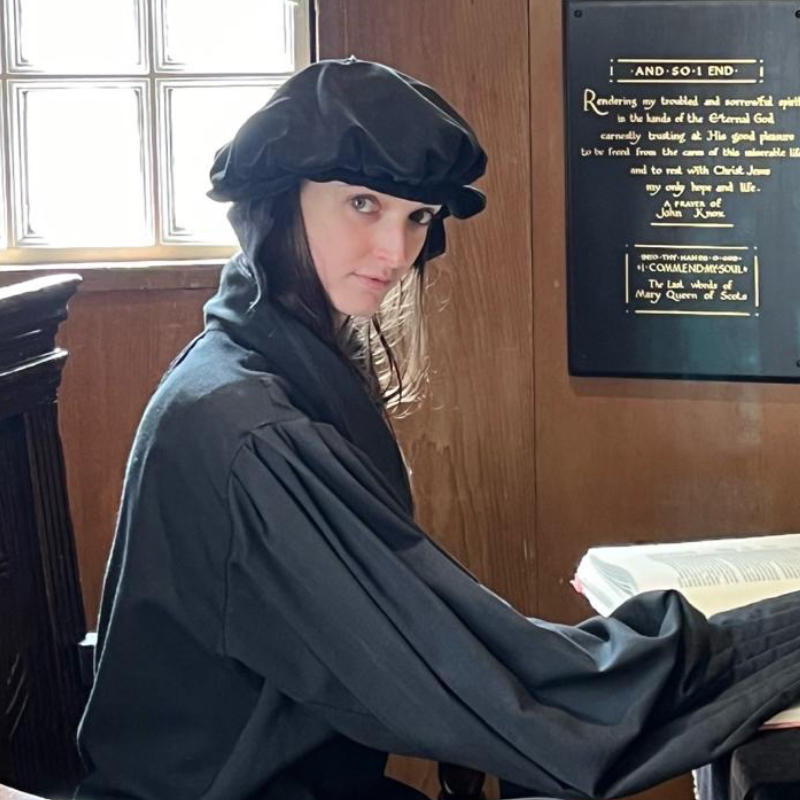
Anna May Katz
2025-26 Stern Center Curatorial Fellow
Ph.D. Candidate, Department of History Johns Hopkins University
E-mail: arober80@jhu.edu
Anna May Katz’s dissertation examines the triumph of snuff-taking, a habit closely bound with the political, material and sexual cultures of ancien régimes spanning Eurasia, from the British Isles to Russia and China. Her first article, “‘The Social Pinch’: The Visual and Gendered World of Snuff-Taking Celebrated and Satirised, 1660-1832,” which appeared in the journal The History of European Ideas in 2025, uses the example of snuff-taking to argue that the history of this period cannot be understood properly by reference to written texts alone, but must account for visual “texts” (images, objects and even rituals) usually ignored by intellectual historians. She is interested in politics and patronage; gender and sexuality; and visual and material culture in the early modern world, with particular focus on the British Isles and British American colonies.
Anna May Katz’s Curatorial Fellowship was generously funded by Joneath Spicer.
Anna May Katz
2025-26 Stern Center Curatorial Fellow
Ph.D. Candidate, Department of History Johns Hopkins University
E-mail: arober80@jhu.edu
Anna May Katz’s dissertation examines the triumph of snuff-taking, a habit closely bound with the political, material and sexual cultures of ancien régimes spanning Eurasia, from the British Isles to Russia and China. Her first article, “‘The Social Pinch’: The Visual and Gendered World of Snuff-Taking Celebrated and Satirised, 1660-1832,” which appeared in the journal The History of European Ideas in 2025, uses the example of snuff-taking to argue that the history of this period cannot be understood properly by reference to written texts alone, but must account for visual “texts” (images, objects and even rituals) usually ignored by intellectual historians. She is interested in politics and patronage; gender and sexuality; and visual and material culture in the early modern world, with particular focus on the British Isles and British American colonies.
Anna May Katz’s Curatorial Fellowship was generously funded by Joneath Spicer.
Anna May Katz
2025-26 Stern Center Curatorial Fellow
Ph.D. Candidate, Department of History Johns Hopkins University
E-mail: arober80@jhu.edu
Anna May Katz’s dissertation examines the triumph of snuff-taking, a habit closely bound with the political, material and sexual cultures of ancien régimes spanning Eurasia, from the British Isles to Russia and China. Her first article, “‘The Social Pinch’: The Visual and Gendered World of Snuff-Taking Celebrated and Satirised, 1660-1832,” which appeared in the journal The History of European Ideas in 2025, uses the example of snuff-taking to argue that the history of this period cannot be understood properly by reference to written texts alone, but must account for visual “texts” (images, objects and even rituals) usually ignored by intellectual historians. She is interested in politics and patronage; gender and sexuality; and visual and material culture in the early modern world, with particular focus on the British Isles and British American colonies.
Anna May Katz’s Curatorial Fellowship was generously funded by Joneath Spicer.

Ambra Marzocchi
2022-23 Stern Center Curatorial Fellow
Ph.D., Department of Classics
Johns Hopkins University
E-mail: ambra.occhidimarzo@gmail.com
amarzoc2@alumni.jh.edu
Ambra Marzocchi was trained in Italy in classical philology and the history of the classical tradition before studying the Latin tradition under Drs. Tunberg and Minkova at the Institutum Studiis Latinis Provehendis of the University of Kentucky. At Johns Hopkins University she has expanded her work focusing also on the history of the book. Her dissertation research examined specimens of the pedagogy of the classical languages during the early modern period in both European and extra-European contexts. As an Italian-certified national archivist and paleographer, she has worked with mediaeval and early modern documents produced by notaries, seigneuries, as well as the papal chancellery. While living in Italy, she taught classical languages and humanities in private and public high schools; during her time in the United States, she has taught university courses on classical languages and civilizations at both the undergraduate and graduate levels.
Ambra Marzocchi
2022-23 Stern Center Curatorial Fellow
Ph.D., Department of Classics
Johns Hopkins University
E-mail: ambra.occhidimarzo@gmail.com
amarzoc2@alumni.jh.edu
Ambra Marzocchi was trained in Italy in classical philology and the history of the classical tradition before studying the Latin tradition under Drs. Tunberg and Minkova at the Institutum Studiis Latinis Provehendis of the University of Kentucky. At Johns Hopkins University she has expanded her work focusing also on the history of the book. Her dissertation research examined specimens of the pedagogy of the classical languages during the early modern period in both European and extra-European contexts. As an Italian-certified national archivist and paleographer, she has worked with mediaeval and early modern documents produced by notaries, seigneuries, as well as the papal chancellery. While living in Italy, she taught classical languages and humanities in private and public high schools; during her time in the United States, she has taught university courses on classical languages and civilizations at both the undergraduate and graduate levels.
Ambra Marzocchi
2022-23 Stern Center Curatorial Fellow
Ph.D., Department of Classics
Johns Hopkins University
E-mail: ambra.occhidimarzo@gmail.com
amarzoc2@alumni.jh.edu
Ambra Marzocchi was trained in Italy in classical philology and the history of the classical tradition before studying the Latin tradition under Drs. Tunberg and Minkova at the Institutum Studiis Latinis Provehendis of the University of Kentucky. At Johns Hopkins University she has expanded her work focusing also on the history of the book. Her dissertation research examined specimens of the pedagogy of the classical languages during the early modern period in both European and extra-European contexts. As an Italian-certified national archivist and paleographer, she has worked with mediaeval and early modern documents produced by notaries, seigneuries, as well as the papal chancellery. While living in Italy, she taught classical languages and humanities in private and public high schools; during her time in the United States, she has taught university courses on classical languages and civilizations at both the undergraduate and graduate levels.
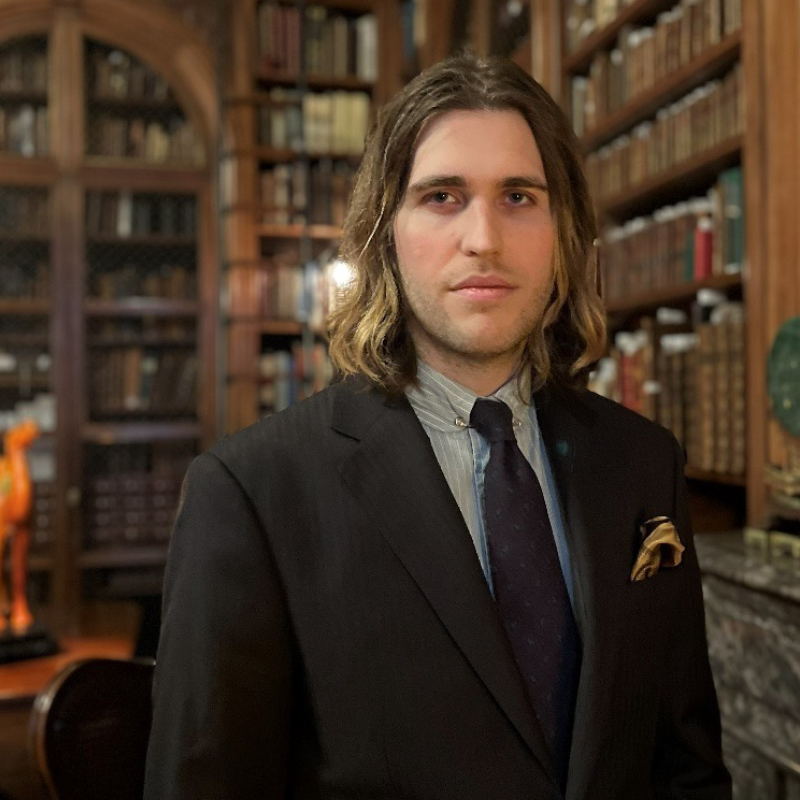
Martin Michalek
2025-26 Stern Center Postdoctoral Fellow
2023-24 Stern Center Curatorial Fellow
Visiting Assistant Professor of Greek, Latin, and Classical Studies, Bryn Mawr College
Ph.D., Department of Classics
Johns Hopkins University
E-mail: mmichalek@brynmawr.edu
Martin Michalek’s research and teaching center on Greek and Latin poetry and its transmission through various media—from ancient papyri and codices to early modern print culture—and its translation into English and Neo-Latin literature. Motivating his studies are questions about poetic influence, aesthetics, and book history. His forthcoming monograph, The Attuned Lyre: Impressions of Horace from Alcaeus to Jazz examines Horace’s carpe diem poetry and its reception from Oxyrhynchus papyri fragments to Lord Byron and jazz music. (Portions of this work appear in Martin’s article in the journal Arion “Byron’s Carpe Diem Poetics.”
His current book project, which develops from teaching and research he carried out as a National Endowment for the Humanities-funded postdoctoral fellow at the Stern Center, will argue that the proliferation of textuality in the ancient world created a rupture in the minds of Alexandrian poets and the Augustan poets who were so influenced by them. Seeking to hide the medium of their books, these poets developed a series of metonyms for the text which persisted from the ancient imagination into the early modern period. A sample of this research, which examines wine as a metaphor for hermeneutics in bucolic poetry, for example, which will soon appear in a forthcoming issue of the journal TAPA.
During Martin’s tenure as a postdoctoral fellow at the Stern Center, he organized a Master Class on classical culture and Renaissance Humanism, a conference on Horace’s corpus and its reception, collaborated on a project regarding annotated early modern ephemera, and worked extensively with JHU’s rich Ephemeral Renaissance collection. He regularly teaches on the history of the book from Gilgamesh to digital archives, classical culture in the Renaissance, and translation theory.
Martin Michalek
2025-26 Stern Center Postdoctoral Fellow
2023-24 Stern Center Curatorial Fellow
Visiting Assistant Professor of Greek, Latin, and Classical Studies, Bryn Mawr College
Ph.D., Department of Classics
Johns Hopkins University
E-mail: mmichalek@brynmawr.edu
Martin Michalek’s research and teaching center on Greek and Latin poetry and its transmission through various media—from ancient papyri and codices to early modern print culture—and its translation into English and Neo-Latin literature. Motivating his studies are questions about poetic influence, aesthetics, and book history. His forthcoming monograph, The Attuned Lyre: Impressions of Horace from Alcaeus to Jazz examines Horace’s carpe diem poetry and its reception from Oxyrhynchus papyri fragments to Lord Byron and jazz music. (Portions of this work appear in Martin’s article in the journal Arion “Byron’s Carpe Diem Poetics.”
His current book project, which develops from teaching and research he carried out as a National Endowment for the Humanities-funded postdoctoral fellow at the Stern Center, will argue that the proliferation of textuality in the ancient world created a rupture in the minds of Alexandrian poets and the Augustan poets who were so influenced by them. Seeking to hide the medium of their books, these poets developed a series of metonyms for the text which persisted from the ancient imagination into the early modern period. A sample of this research, which examines wine as a metaphor for hermeneutics in bucolic poetry, for example, which will soon appear in a forthcoming issue of the journal TAPA.
During Martin’s tenure as a postdoctoral fellow at the Stern Center, he organized a Master Class on classical culture and Renaissance Humanism, a conference on Horace’s corpus and its reception, collaborated on a project regarding annotated early modern ephemera, and worked extensively with JHU’s rich Ephemeral Renaissance collection. He regularly teaches on the history of the book from Gilgamesh to digital archives, classical culture in the Renaissance, and translation theory.
Martin Michalek
2025-26 Stern Center Postdoctoral Fellow
2023-24 Stern Center Curatorial Fellow
Visiting Assistant Professor of Greek, Latin, and Classical Studies, Bryn Mawr College
Ph.D., Department of Classics
Johns Hopkins University
E-mail: mmichalek@brynmawr.edu
Martin Michalek’s research and teaching center on Greek and Latin poetry and its transmission through various media—from ancient papyri and codices to early modern print culture—and its translation into English and Neo-Latin literature. Motivating his studies are questions about poetic influence, aesthetics, and book history. His forthcoming monograph, The Attuned Lyre: Impressions of Horace from Alcaeus to Jazz examines Horace’s carpe diem poetry and its reception from Oxyrhynchus papyri fragments to Lord Byron and jazz music. (Portions of this work appear in Martin’s article in the journal Arion “Byron’s Carpe Diem Poetics.”
His current book project, which develops from teaching and research he carried out as a National Endowment for the Humanities-funded postdoctoral fellow at the Stern Center, will argue that the proliferation of textuality in the ancient world created a rupture in the minds of Alexandrian poets and the Augustan poets who were so influenced by them. Seeking to hide the medium of their books, these poets developed a series of metonyms for the text which persisted from the ancient imagination into the early modern period. A sample of this research, which examines wine as a metaphor for hermeneutics in bucolic poetry, for example, which will soon appear in a forthcoming issue of the journal TAPA.
During Martin’s tenure as a postdoctoral fellow at the Stern Center, he organized a Master Class on classical culture and Renaissance Humanism, a conference on Horace’s corpus and its reception, collaborated on a project regarding annotated early modern ephemera, and worked extensively with JHU’s rich Ephemeral Renaissance collection. He regularly teaches on the history of the book from Gilgamesh to digital archives, classical culture in the Renaissance, and translation theory.

Amrish Nair
2023-24 Stern Center Curatorial Fellow
Ph.D. Candidate, Department of History
E-mail: anair14@jhu.edu
Amrish Nair earned his BA and MA in history from the University of Georgia. His Master’s thesis examined how Spanish religious authorities and the Inquisition received renegades—Spaniards captured by Ottoman corsairs who converted to Islam—during the sixteenth and seventeenth centuries. At Hopkins, Amrish continues to study and write about the history of conversion across the Spanish Empire and Mediterranean world. He is currently interested in writing about the relationship between conversion and the material body by examining a series of altarpieces that depict Sts. Cosmas and Damian performing leg transplants.
Amrish Nair’s Curatorial Fellowship had been generously funded by the family of Deborah and Andre Denis.
Amrish Nair
2023-24 Stern Center Curatorial Fellow
Ph.D. Candidate, Department of History
E-mail: anair14@jhu.edu
Amrish Nair earned his BA and MA in history from the University of Georgia. His Master’s thesis examined how Spanish religious authorities and the Inquisition received renegades—Spaniards captured by Ottoman corsairs who converted to Islam—during the sixteenth and seventeenth centuries. At Hopkins, Amrish continues to study and write about the history of conversion across the Spanish Empire and Mediterranean world. He is currently interested in writing about the relationship between conversion and the material body by examining a series of altarpieces that depict Sts. Cosmas and Damian performing leg transplants.
Amrish Nair’s Curatorial Fellowship had been generously funded by the family of Deborah and Andre Denis.
Amrish Nair
2023-24 Stern Center Curatorial Fellow
Ph.D. Candidate, Department of History
E-mail: anair14@jhu.edu
Amrish Nair earned his BA and MA in history from the University of Georgia. His Master’s thesis examined how Spanish religious authorities and the Inquisition received renegades—Spaniards captured by Ottoman corsairs who converted to Islam—during the sixteenth and seventeenth centuries. At Hopkins, Amrish continues to study and write about the history of conversion across the Spanish Empire and Mediterranean world. He is currently interested in writing about the relationship between conversion and the material body by examining a series of altarpieces that depict Sts. Cosmas and Damian performing leg transplants.
Amrish Nair’s Curatorial Fellowship had been generously funded by the family of Deborah and Andre Denis.

Maxim Rigaux
2022-23 Renaissance Society of America/Stern Center Visiting Research Fellow
Ramón y Cajal Postdoctoral Fellow, University of Seville
Ph.D. Ghent University, Department of Literary Studies
E-mail: mrigaux@us.es
Webpage
Currently at the University of Seville, Maxim Rigaux was formerly a post-doctoral research fellow at Ghent University, and also affiliated with the European Research Council-funded project, Women’s Invisible Ink (WINK) hosted by the Universitat Autònoma de Barcelona. His 2018 doctoral dissertation focused on literary epics inspired by the naval victory of the Holy League of Catholic states at the 1571 Battle of Lepanto. Dr. Rigaux has also been awarded postdoctoral fellowships by the Belgian American Educational Foundation (BAEF) and the Fulbright commission, and was a visiting scholar at the University of Chicago in 2018-19. His current research focuses on the cultural and literary histories of the early modern Iberian world, including interactions between Latin and vernacular languages, relationships between text and image, race and gender studies, and multilingualism. He is a co-founder of the research group RELICS, Researchers of European Literary Identity, Cosmopolitanism, and the Schools, and serves as editor-in-chief of the open access scholarly journal JOLCEL, the Journal of Latin Cosmopolitanism and European Schools. In Fall 2022, Dr. Rigaux was awarded a jointly sponsored Renaissance Society of America (RSA) and Stern Center Visiting Research Grant to conduct research on Spanish-language literary texts in the Women of the Book Collection.
Maxim Rigaux
2022-23 Renaissance Society of America/Stern Center Visiting Research Fellow
Ramón y Cajal Postdoctoral Fellow, University of Seville
Ph.D. Ghent University, Department of Literary Studies
E-mail: mrigaux@us.es
Webpage
Currently at the University of Seville, Maxim Rigaux was formerly a post-doctoral research fellow at Ghent University, and also affiliated with the European Research Council-funded project, Women’s Invisible Ink (WINK) hosted by the Universitat Autònoma de Barcelona. His 2018 doctoral dissertation focused on literary epics inspired by the naval victory of the Holy League of Catholic states at the 1571 Battle of Lepanto. Dr. Rigaux has also been awarded postdoctoral fellowships by the Belgian American Educational Foundation (BAEF) and the Fulbright commission, and was a visiting scholar at the University of Chicago in 2018-19. His current research focuses on the cultural and literary histories of the early modern Iberian world, including interactions between Latin and vernacular languages, relationships between text and image, race and gender studies, and multilingualism. He is a co-founder of the research group RELICS, Researchers of European Literary Identity, Cosmopolitanism, and the Schools, and serves as editor-in-chief of the open access scholarly journal JOLCEL, the Journal of Latin Cosmopolitanism and European Schools. In Fall 2022, Dr. Rigaux was awarded a jointly sponsored Renaissance Society of America (RSA) and Stern Center Visiting Research Grant to conduct research on Spanish-language literary texts in the Women of the Book Collection.
Maxim Rigaux
2022-23 Renaissance Society of America/Stern Center Visiting Research Fellow
Ramón y Cajal Postdoctoral Fellow, University of Seville
Ph.D. Ghent University, Department of Literary Studies
E-mail: mrigaux@us.es
Webpage
Currently at the University of Seville, Maxim Rigaux was formerly a post-doctoral research fellow at Ghent University, and also affiliated with the European Research Council-funded project, Women’s Invisible Ink (WINK) hosted by the Universitat Autònoma de Barcelona. His 2018 doctoral dissertation focused on literary epics inspired by the naval victory of the Holy League of Catholic states at the 1571 Battle of Lepanto. Dr. Rigaux has also been awarded postdoctoral fellowships by the Belgian American Educational Foundation (BAEF) and the Fulbright commission, and was a visiting scholar at the University of Chicago in 2018-19. His current research focuses on the cultural and literary histories of the early modern Iberian world, including interactions between Latin and vernacular languages, relationships between text and image, race and gender studies, and multilingualism. He is a co-founder of the research group RELICS, Researchers of European Literary Identity, Cosmopolitanism, and the Schools, and serves as editor-in-chief of the open access scholarly journal JOLCEL, the Journal of Latin Cosmopolitanism and European Schools. In Fall 2022, Dr. Rigaux was awarded a jointly sponsored Renaissance Society of America (RSA) and Stern Center Visiting Research Grant to conduct research on Spanish-language literary texts in the Women of the Book Collection.
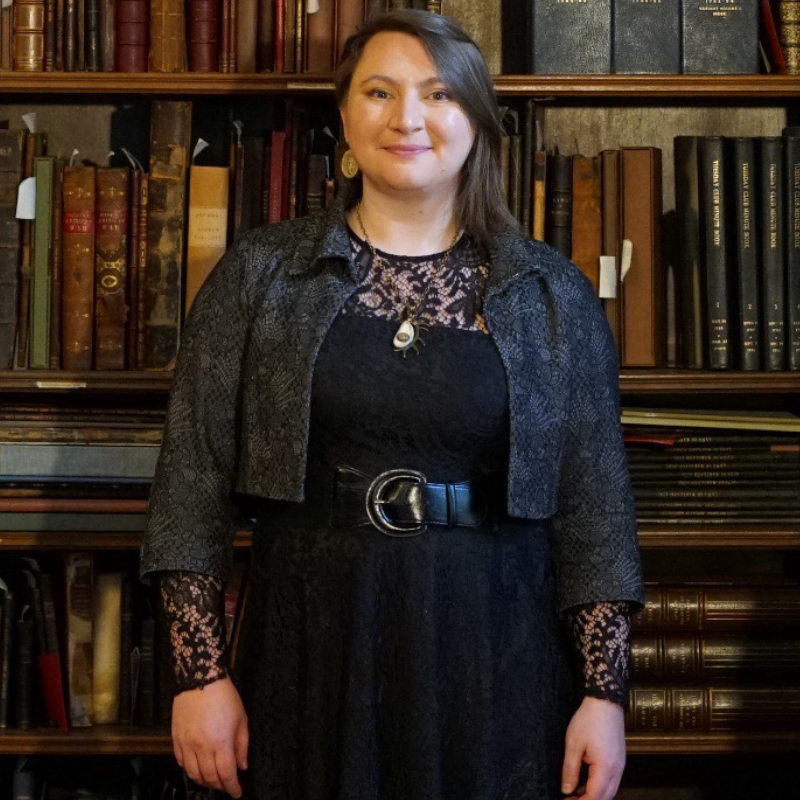
Kathryn H. Stutz
2025-26 Stern Center Curatorial Fellow
Ph.D., Department of Classics Johns Hopkins University
E-mail: kstutz1@jhu.edu
Kathryn studies the impact of the ancient Greek and Roman voyage narratives, with a particular focus on the “Polar Classics” that frame how we view the icy edges of the earth. Before beginning her current studies at Hopkins, Kathryn earned a B.A. in Classics alongside a B.A. in Anthropology at the University of Puget Sound, where she conducted research on ancient Greek sociolinguistics, Alaskan environmental science, and museum collection ethics. Kathryn has published on the relationships between Greek and Latin literature and modern media, from the fantasy-writing of J.R.R. Tolkien, to the Broadway musical Hadestown, and in her forthcoming publications she examines Neoclassical architecture in Tasmania and the history of classicizing monuments in the city of Baltimore. Both at Hopkins and as an instructor at the Intercollegiate Center for Classical Studies in Italy, Kathryn has taught courses on ancient Greek seafaring, anthropophagy in the ancient world, and the development of science fiction. Kathryn’s doctoral dissertation explores how ancient Mediterranean myths shaped polar exploration from the Renaissance to the present day.
Kathryn Stutz’s Curatorial Fellowship was generously funded by Mark McConnell.
Kathryn H. Stutz
2025-26 Stern Center Curatorial Fellow
Ph.D., Department of Classics Johns Hopkins University
E-mail: kstutz1@jhu.edu
Kathryn studies the impact of the ancient Greek and Roman voyage narratives, with a particular focus on the “Polar Classics” that frame how we view the icy edges of the earth. Before beginning her current studies at Hopkins, Kathryn earned a B.A. in Classics alongside a B.A. in Anthropology at the University of Puget Sound, where she conducted research on ancient Greek sociolinguistics, Alaskan environmental science, and museum collection ethics. Kathryn has published on the relationships between Greek and Latin literature and modern media, from the fantasy-writing of J.R.R. Tolkien, to the Broadway musical Hadestown, and in her forthcoming publications she examines Neoclassical architecture in Tasmania and the history of classicizing monuments in the city of Baltimore. Both at Hopkins and as an instructor at the Intercollegiate Center for Classical Studies in Italy, Kathryn has taught courses on ancient Greek seafaring, anthropophagy in the ancient world, and the development of science fiction. Kathryn’s doctoral dissertation explores how ancient Mediterranean myths shaped polar exploration from the Renaissance to the present day.
Kathryn Stutz’s Curatorial Fellowship was generously funded by Mark McConnell.
Kathryn H. Stutz
2025-26 Stern Center Curatorial Fellow
Ph.D., Department of Classics Johns Hopkins University
E-mail: kstutz1@jhu.edu
Kathryn studies the impact of the ancient Greek and Roman voyage narratives, with a particular focus on the “Polar Classics” that frame how we view the icy edges of the earth. Before beginning her current studies at Hopkins, Kathryn earned a B.A. in Classics alongside a B.A. in Anthropology at the University of Puget Sound, where she conducted research on ancient Greek sociolinguistics, Alaskan environmental science, and museum collection ethics. Kathryn has published on the relationships between Greek and Latin literature and modern media, from the fantasy-writing of J.R.R. Tolkien, to the Broadway musical Hadestown, and in her forthcoming publications she examines Neoclassical architecture in Tasmania and the history of classicizing monuments in the city of Baltimore. Both at Hopkins and as an instructor at the Intercollegiate Center for Classical Studies in Italy, Kathryn has taught courses on ancient Greek seafaring, anthropophagy in the ancient world, and the development of science fiction. Kathryn’s doctoral dissertation explores how ancient Mediterranean myths shaped polar exploration from the Renaissance to the present day.
Kathryn Stutz’s Curatorial Fellowship was generously funded by Mark McConnell.

Neil Weijer
2017-19 Stern Center Postdoctoral Fellow
Ph.D., Johns Hopkins University, Department of History
E-mail: neil.weijer@gmail.com
Neil Weijer was Curator of the University of Florida’s Harold & Mary Jean Hanson Rare Book Collection, whose holdings illustrate the emergence of literary, cultural, and scientific movements from the late Middle Ages to the present. Beginning in 2019, he worked to develop and promote the collection to engage students and faculty on campus and around the state, increasingly in digital spaces. He launched and directed the project Storied Books at the University of Florida, which sponsors and showcases student research and experimentation in the University’s Special collections. His own research focuses on the history of early books and manuscripts, and especially on the intersections between legendary history, forgery, and scholarly practice in medieval and early modern England. In his previous position as Stern Center Postdoctoral Fellow (2017-19), he contributed extensively to the Archaeology of Reading in Early Modern Europe digital humanities project.
Neil Weijer
2017-19 Stern Center Postdoctoral Fellow
Ph.D., Johns Hopkins University, Department of History
E-mail: neil.weijer@gmail.com
Neil Weijer was Curator of the University of Florida’s Harold & Mary Jean Hanson Rare Book Collection, whose holdings illustrate the emergence of literary, cultural, and scientific movements from the late Middle Ages to the present. Beginning in 2019, he worked to develop and promote the collection to engage students and faculty on campus and around the state, increasingly in digital spaces. He launched and directed the project Storied Books at the University of Florida, which sponsors and showcases student research and experimentation in the University’s Special collections. His own research focuses on the history of early books and manuscripts, and especially on the intersections between legendary history, forgery, and scholarly practice in medieval and early modern England. In his previous position as Stern Center Postdoctoral Fellow (2017-19), he contributed extensively to the Archaeology of Reading in Early Modern Europe digital humanities project.
Neil Weijer
2017-19 Stern Center Postdoctoral Fellow
Ph.D., Johns Hopkins University, Department of History
E-mail: neil.weijer@gmail.com
Neil Weijer was Curator of the University of Florida’s Harold & Mary Jean Hanson Rare Book Collection, whose holdings illustrate the emergence of literary, cultural, and scientific movements from the late Middle Ages to the present. Beginning in 2019, he worked to develop and promote the collection to engage students and faculty on campus and around the state, increasingly in digital spaces. He launched and directed the project Storied Books at the University of Florida, which sponsors and showcases student research and experimentation in the University’s Special collections. His own research focuses on the history of early books and manuscripts, and especially on the intersections between legendary history, forgery, and scholarly practice in medieval and early modern England. In his previous position as Stern Center Postdoctoral Fellow (2017-19), he contributed extensively to the Archaeology of Reading in Early Modern Europe digital humanities project.

Rachel Williams
2024-25 Stern Center Curatorial Fellow
Ph.D. Candidate, Department of Modern Languages & Literatures, Spanish and Portuguese Section, Johns Hopkins University
E-mail: rwill205@jhu.edu
Rachel Williams’ research interests include Spanish Golden Age literature, gender, sexuality, and identity. Her dissertation project investigates how the theme of the desengaño (disillusionment) manifests as a tool for disrupting binaries in various pieces of Golden Age literature, and how this theme may be applied to other literatures and time periods. Prior to beginning her doctoral studies at Hopkins, Rachel received a B.A. in the College of Letters in Feminist, Gender, and Sexuality Studies at Wesleyan University, where her undergraduate thesis explored representations of male lovesickness in the Spanish Golden Age.
Rachel Williams’ Stern Center Curatorial Fellowship has been generously funded by Mary Zampino.
Rachel Williams
2024-25 Stern Center Curatorial Fellow
Ph.D. Candidate, Department of Modern Languages & Literatures, Spanish and Portuguese Section, Johns Hopkins University
E-mail: rwill205@jhu.edu
Rachel Williams’ research interests include Spanish Golden Age literature, gender, sexuality, and identity. Her dissertation project investigates how the theme of the desengaño (disillusionment) manifests as a tool for disrupting binaries in various pieces of Golden Age literature, and how this theme may be applied to other literatures and time periods. Prior to beginning her doctoral studies at Hopkins, Rachel received a B.A. in the College of Letters in Feminist, Gender, and Sexuality Studies at Wesleyan University, where her undergraduate thesis explored representations of male lovesickness in the Spanish Golden Age.
Rachel Williams’ Stern Center Curatorial Fellowship has been generously funded by Mary Zampino.
Rachel Williams
2024-25 Stern Center Curatorial Fellow
Ph.D. Candidate, Department of Modern Languages & Literatures, Spanish and Portuguese Section, Johns Hopkins University
E-mail: rwill205@jhu.edu
Rachel Williams’ research interests include Spanish Golden Age literature, gender, sexuality, and identity. Her dissertation project investigates how the theme of the desengaño (disillusionment) manifests as a tool for disrupting binaries in various pieces of Golden Age literature, and how this theme may be applied to other literatures and time periods. Prior to beginning her doctoral studies at Hopkins, Rachel received a B.A. in the College of Letters in Feminist, Gender, and Sexuality Studies at Wesleyan University, where her undergraduate thesis explored representations of male lovesickness in the Spanish Golden Age.
Rachel Williams’ Stern Center Curatorial Fellowship has been generously funded by Mary Zampino.

Václav Zheng
2024-25 Stern Center Curatorial Fellow
Ph.D., Department of History, Johns Hopkins University
E-mail: vaclav.zheng@jhu.edu
Václav Zheng is both a historical theorist and a cultural and intellectual historian of early modern, particularly east-central, Europe. He is actively engaged in Renaissance studies, especially in Slavic Europe, as well as utopian studies, and the philosophy of history. His dissertation explores Uchronian thought and its embedded emotional repertoires in Renaissance Poland. He is also editing a critical translation volume on a fifteenth-century Polish intellectual text, and is planning a second research project on sixteenth- and seventeenth-century Czech history writing. His theoretical interests focus on modern historiography, in particular on relationship of history and argumentation. He has been a course instructor at the Krieger School of Arts & Sciences since 2019, and a faculty lecturer at the Peabody Institute since 2023. Upon completing his PhD in 2025, Dr. Zheng has served as a postdoctoral fellow in the Krieger School of Arts and Sciences.
Václav Zheng’s Stern Center Curatorial Fellowship has been generously funded by Mary Zampino.
Václav Zheng
2024-25 Stern Center Curatorial Fellow
Ph.D., Department of History, Johns Hopkins University
E-mail: vaclav.zheng@jhu.edu
Václav Zheng is both a historical theorist and a cultural and intellectual historian of early modern, particularly east-central, Europe. He is actively engaged in Renaissance studies, especially in Slavic Europe, as well as utopian studies, and the philosophy of history. His dissertation explores Uchronian thought and its embedded emotional repertoires in Renaissance Poland. He is also editing a critical translation volume on a fifteenth-century Polish intellectual text, and is planning a second research project on sixteenth- and seventeenth-century Czech history writing. His theoretical interests focus on modern historiography, in particular on relationship of history and argumentation. He has been a course instructor at the Krieger School of Arts & Sciences since 2019, and a faculty lecturer at the Peabody Institute since 2023. Upon completing his PhD in 2025, Dr. Zheng has served as a postdoctoral fellow in the Krieger School of Arts and Sciences.
Václav Zheng’s Stern Center Curatorial Fellowship has been generously funded by Mary Zampino.
Václav Zheng
2024-25 Stern Center Curatorial Fellow
Ph.D., Department of History, Johns Hopkins University
E-mail: vaclav.zheng@jhu.edu
Václav Zheng is both a historical theorist and a cultural and intellectual historian of early modern, particularly east-central, Europe. He is actively engaged in Renaissance studies, especially in Slavic Europe, as well as utopian studies, and the philosophy of history. His dissertation explores Uchronian thought and its embedded emotional repertoires in Renaissance Poland. He is also editing a critical translation volume on a fifteenth-century Polish intellectual text, and is planning a second research project on sixteenth- and seventeenth-century Czech history writing. His theoretical interests focus on modern historiography, in particular on relationship of history and argumentation. He has been a course instructor at the Krieger School of Arts & Sciences since 2019, and a faculty lecturer at the Peabody Institute since 2023. Upon completing his PhD in 2025, Dr. Zheng has served as a postdoctoral fellow in the Krieger School of Arts and Sciences.
Václav Zheng’s Stern Center Curatorial Fellowship has been generously funded by Mary Zampino.
