


Stern Center Faculty Board

Earle Havens
Director, The Virginia Fox Stern Center for the History of the Book in the Renaissance
Nancy H. Hall Curator of Rare Books & Manuscripts
Adjunct Professor of Media Studies, Department of Modern Languages & Literatures
Sheridan Libraries, Johns Hopkins University
Ph.D., Yale University
E-mail: earle.havens@jhu.edu
Faculty Website
Earle Havens earned an interdisciplinary joint-PhD in Renaissance Studies and History at Yale University with a dissertation exploring the underground print culture of the Counter-Reformation during the second half of the sixteenth century in England and on the European continent. His academic teaching and published scholarship focus on the history of the book and material texts in early modern Europe, ca. 1400-1750. He has authored, co-authored, and edited thirteen scholarly books and exhibition catalogues, and several dozen articles and book chapters, most recently on the marginalia of the Renaissance humanist Gabriel Harvey, the early history of the Leiden University Library, the Platin-Moretus press, and a series of entries for the Oxford Dictionary of National Biography on female English Catholic conspirators and book smugglers of the late 16th-century. His most recent book, with Mark Rankin is The Elizabethan Catholic Underground: Clandestine Printing and Scribal Subversion in the English Counter-Reformation (Brill, 2025). He is currently completing three books: (1) with Susannah Monta and Elizabeth Patton, Catholic Aristocrats, Jesuits, and Life Writing in Early Modern England: The Manuscript Biographies of Philip Howard and Anne Dacre Howard, the Earl and Countess of Arundel (Pontifical Institute of Mediaeval Studies Series, University of Toronto Press, 2026); (2) with Erin Rowe and Kelsey Champagne, Women of the Book: The Spiritual Lives of Early Modern Women, 1450-1800 (Pennsylvania State University Press, 2026); and (3) with Jennifer Rampling, Empire of Words: How Richard Eden Read the New World, in progress.
Earle Havens is also co-editor with Anthony Grafton (Princeton) and Ann Blair (Harvard) of the “Information Cultures” monographs series of the Johns Hopkins University Press, and served for five years as Principal Investigator of the digital humanities project The Archaeology of Reading in Early Modern Europe (2013-18), with Anthony Grafton, Lisa Jardine, and Matthew Symonds. His scholarly research has been supported most recently by rare book research fellowships from the Houghton, Huntington, William Andrews Clark, and John Carter Brown Libraries. In 2019, he was a Member of the School of Historical Studies at the Institute for Advanced Study, Princeton, and in 2021 a Visiting Fellow of All Souls College, Oxford.
Earle Havens
Director, The Virginia Fox Stern Center for the History of the Book in the Renaissance
Nancy H. Hall Curator of Rare Books & Manuscripts
Adjunct Professor of Media Studies, Department of Modern Languages & Literatures
Johns Hopkins University
Ph.D., Yale University
E-mail: earle.havens@jhu.edu
Faculty Website
Earle Havens earned an interdisciplinary joint-PhD in Renaissance Studies and History at Yale University with a dissertation exploring the underground print culture of the Counter-Reformation during the second half of the sixteenth century in England and on the European continent. His academic teaching and published scholarship focus on the history of the book and material texts in early modern Europe, ca. 1400-1750. He has authored, co-authored, and edited thirteen scholarly books and exhibition catalogues, and several dozen articles and book chapters, most recently on the marginalia of the Renaissance humanist Gabriel Harvey, the early history of the Leiden University Library, the Platin-Moretus press, and a series of entries for the Oxford Dictionary of National Biography on female English Catholic conspirators and book smugglers of the late 16th-century. His most recent book, with Mark Rankin is The Elizabethan Catholic Underground: Clandestine Printing and Scribal Subversion in the English Counter-Reformation (Brill, 2025). He is currently completing three books: (1) with Susannah Monta and Elizabeth Patton, Catholic Aristocrats, Jesuits, and Life Writing in Early Modern England: The Manuscript Biographies of Philip Howard and Anne Dacre Howard, the Earl and Countess of Arundel (Pontifical Institute of Mediaeval Studies Series, University of Toronto Press, 2026); (2) with Erin Rowe and Kelsey Champagne, Women of the Book: The Spiritual Lives of Early Modern Women, 1450-1800 (Pennsylvania State University Press, 2026); and (3) with Jennifer Rampling, Empire of Words: How Richard Eden Read the New World, in progress.
Earle Havens is also co-editor with Anthony Grafton (Princeton) and Ann Blair (Harvard) of the “Information Cultures” monographs series of the Johns Hopkins University Press, and served for five years as Principal Investigator of the digital humanities project The Archaeology of Reading in Early Modern Europe (2013-18), with Anthony Grafton, Lisa Jardine, and Matthew Symonds. His scholarly research has been supported most recently by rare book research fellowships from the Houghton, Huntington, William Andrews Clark, and John Carter Brown Libraries. In 2019, he was a Member of the School of Historical Studies at the Institute for Advanced Study, Princeton, and in 2021 a Visiting Fellow of All Souls College, Oxford.
Earle Havens
Director, The Virginia Fox Stern Center for the History of the Book in the Renaissance
Nancy H. Hall Curator of Rare Books & Manuscripts
Adjunct Professor of Media Studies, Department of Modern Languages & Literatures
Johns Hopkins University
Ph.D., Yale University
E-mail: earle.havens@jhu.edu
Faculty Website
Earle Havens earned an interdisciplinary joint-PhD in Renaissance Studies and History at Yale University with a dissertation exploring the underground print culture of the Counter-Reformation during the second half of the sixteenth century in England and on the European continent. His academic teaching and published scholarship focus on the history of the book and material texts in early modern Europe, ca. 1400-1750. He has authored, co-authored, and edited thirteen scholarly books and exhibition catalogues, and several dozen articles and book chapters, most recently on the marginalia of the Renaissance humanist Gabriel Harvey, the early history of the Leiden University Library, the Platin-Moretus press, and a series of entries for the Oxford Dictionary of National Biography on female English Catholic conspirators and book smugglers of the late 16th-century. His most recent book, with Mark Rankin is The Elizabethan Catholic Underground: Clandestine Printing and Scribal Subversion in the English Counter-Reformation (Brill, 2025). He is currently completing three books: (1) with Susannah Monta and Elizabeth Patton, Catholic Aristocrats, Jesuits, and Life Writing in Early Modern England: The Manuscript Biographies of Philip Howard and Anne Dacre Howard, the Earl and Countess of Arundel (Pontifical Institute of Mediaeval Studies Series, University of Toronto Press, 2026); (2) with Erin Rowe and Kelsey Champagne, Women of the Book: The Spiritual Lives of Early Modern Women, 1450-1800 (Pennsylvania State University Press, 2026); and (3) with Jennifer Rampling, Empire of Words: How Richard Eden Read the New World, in progress.
Earle Havens is also co-editor with Anthony Grafton (Princeton) and Ann Blair (Harvard) of the “Information Cultures” monographs series of the Johns Hopkins University Press, and served for five years as Principal Investigator of the digital humanities project The Archaeology of Reading in Early Modern Europe (2013-18), with Anthony Grafton, Lisa Jardine, and Matthew Symonds. His scholarly research has been supported most recently by rare book research fellowships from the Houghton, Huntington, William Andrews Clark, and John Carter Brown Libraries. In 2019, he was a Member of the School of Historical Studies at the Institute for Advanced Study, Princeton, and in 2021 a Visiting Fellow of All Souls College, Oxford.

Erin Rowe
Charles Homer Haskins Professor of History
Vice Dean of Undergraduate Studies
Johns Hopkins University
Ph.D., Johns Hopkins University
E-mail: erowe1@jhu.edu
Faculty Website
Personal Website
Erin Rowe is Professor and Director of Undergraduate Studies in the Department of History at Johns Hopkins University. Her scholarship focuses on the religious culture of the early modern Catholic world, with particular emphasis on the Spanish monarchy. Her publications include Saint and Nation: Santiago, Teresa of Avila, and Plural Identities in Early Modern Spain (Penn State University Press, 2011); The Early Modern Hispanic World: Transnational and Interdisciplinary Approaches (Cambridge University Press, 2017); and Black Saints in Early Modern Global Catholicism (Cambridge University Press, 2019). Her current research deals with black saints in early modern global Catholicism, drawing together strands of the story of several saints from Sicily, Spain, Portugal, Brazil, Mexico, Central Africa, and Peru through visual culture, devotional texts, and practices of transmission within the larger context of the global church. In Fall 2019, Dr. Rowe co-organized an international Stern Center conference at JHU with Earle Havens on JHU’s Women of the Book collection; they are currently co-editing the resulting volume of essays to appear from the Penn State Press in 2025.
Erin Rowe
Charles Homer Haskins Professor of History
Vice Dean of Undergraduate Studies
Johns Hopkins University
Ph.D., Johns Hopkins University
E-mail: erowe1@jhu.edu
Faculty Website
Personal Website
Erin Rowe is Professor and Director of Undergraduate Studies in the Department of History at Johns Hopkins University. Her scholarship focuses on the religious culture of the early modern Catholic world, with particular emphasis on the Spanish monarchy. Her publications include Saint and Nation: Santiago, Teresa of Avila, and Plural Identities in Early Modern Spain (Penn State University Press, 2011); The Early Modern Hispanic World: Transnational and Interdisciplinary Approaches (Cambridge University Press, 2017); and Black Saints in Early Modern Global Catholicism (Cambridge University Press, 2019). Her current research deals with black saints in early modern global Catholicism, drawing together strands of the story of several saints from Sicily, Spain, Portugal, Brazil, Mexico, Central Africa, and Peru through visual culture, devotional texts, and practices of transmission within the larger context of the global church. In Fall 2019, Dr. Rowe co-organized an international Stern Center conference at JHU with Earle Havens on JHU’s Women of the Book collection; they are currently co-editing the resulting volume of essays to appear from the Penn State Press in 2025.
Erin Rowe
Charles Homer Haskins Professor of History
Vice Dean of Undergraduate Studies
Johns Hopkins University
Ph.D., Johns Hopkins University
E-mail: erowe1@jhu.edu
Faculty Website
Personal Website
Erin Rowe is Professor and Director of Undergraduate Studies in the Department of History at Johns Hopkins University. Her scholarship focuses on the religious culture of the early modern Catholic world, with particular emphasis on the Spanish monarchy. Her publications include Saint and Nation: Santiago, Teresa of Avila, and Plural Identities in Early Modern Spain (Penn State University Press, 2011); The Early Modern Hispanic World: Transnational and Interdisciplinary Approaches (Cambridge University Press, 2017); and Black Saints in Early Modern Global Catholicism (Cambridge University Press, 2019). Her current research deals with black saints in early modern global Catholicism, drawing together strands of the story of several saints from Sicily, Spain, Portugal, Brazil, Mexico, Central Africa, and Peru through visual culture, devotional texts, and practices of transmission within the larger context of the global church. In Fall 2019, Dr. Rowe co-organized an international Stern Center conference at JHU with Earle Havens on JHU’s Women of the Book collection; they are currently co-editing the resulting volume of essays to appear from the Penn State Press in 2025.

Paul Michael Johnson
Associate Research Professor, Department of Modern Languages & Literatures
Johns Hopkins University
Ph.D., University of California, Irvine
E-mail: pmjohnson@jhu.edu
Faculty Website
Paul Michael Johnson is a specialist in early modern Spanish literature, with a particular focus on the history of emotion, the senses, and the body. He is the author of Affective Geographies: Cervantes, Emotion, and the Literary Mediterranean (University of Toronto Press, 2021) and co-editor of Cervantine Futures: Reading Cervantes after the Critical Turn (Vanderbilt University Press, 2026) and Cervantes in Transit: Essays in Honor of Francisco Layna Ranz (University of Delaware Press, 2027). His work has also appeared in such journals as Renaissance Quarterly, PMLA, Atlantic Studies, MLN, and Exemplaria, and he serves as the editor-in-chief of Cervantes: Journal of the Cervantes Society of America. His current book project explores the somatics of race across the early modern world.
Paul Michael Johnson
Associate Research Professor, Department of Modern Languages & Literatures
Johns Hopkins University
Ph.D., University of California, Irvine
E-mail: pmjohnson@jhu.edu
Faculty Website
Paul Michael Johnson is a specialist in early modern Spanish literature, with a particular focus on the history of emotion, the senses, and the body. He is the author of Affective Geographies: Cervantes, Emotion, and the Literary Mediterranean (University of Toronto Press, 2021) and co-editor of Cervantine Futures: Reading Cervantes after the Critical Turn (Vanderbilt University Press, 2026) and Cervantes in Transit: Essays in Honor of Francisco Layna Ranz (University of Delaware Press, 2027). His work has also appeared in such journals as Renaissance Quarterly, PMLA, Atlantic Studies, MLN, and Exemplaria, and he serves as the editor-in-chief of Cervantes: Journal of the Cervantes Society of America. His current book project explores the somatics of race across the early modern world.
Paul Michael Johnson
Associate Research Professor, Department of Modern Languages & Literatures
Johns Hopkins University
Ph.D., University of California, Irvine
E-mail: pmjohnson@jhu.edu
Faculty Website
Paul Michael Johnson is a specialist in early modern Spanish literature, with a particular focus on the history of emotion, the senses, and the body. He is the author of Affective Geographies: Cervantes, Emotion, and the Literary Mediterranean (University of Toronto Press, 2021) and co-editor of Cervantine Futures: Reading Cervantes after the Critical Turn (Vanderbilt University Press, 2026) and Cervantes in Transit: Essays in Honor of Francisco Layna Ranz (University of Delaware Press, 2027). His work has also appeared in such journals as Renaissance Quarterly, PMLA, Atlantic Studies, MLN, and Exemplaria, and he serves as the editor-in-chief of Cervantes: Journal of the Cervantes Society of America. His current book project explores the somatics of race across the early modern world.

Diego Javier Luis
Rohrbaugh Family Assistant Professor, Department of History
Ph.D., Brown University
E-mail: diego.luis@jhu.edu
Faculty Website
Personal Website
Diego Javier Luis specializes in colonial Latin American history with an emphasis on the Pacific World and Asia-Latin America connections. He is the author of The First Asians in the Americas: A Transpacific History (Harvard University Press, 2024). It is the first book to examine the full scope of free and enslaved Asian mobility to and through the Americas during the Manila galleon period (1565-1815) and is the recipient of five book awards. His second project, also with Harvard University Press, is a broader examination of Spanish imperial vulnerability in the Pacific World and the microhistories of individuals—from a Dutch privateer to an Afro-Mexican diviner—who negotiated and benefited from the fracturing of colonial power at the borders of the empire. His third project is Early Modern Fencing: A Global History, which focuses on the spread and localization of fencing in overseas European colonies and is currently being supported by a fellowship at the Folger Shakespeare Library. Finally, he is the developer of Obraje, a board game that simulates social mobility in seventeenth-century Mexico. The game will be published by Central Michigan University Press’s Scholarship and Lore: Games for Learning Series.
Diego Javier Luis
Rohrbaugh Family Assistant Professor, Department of History
Ph.D., Brown University
E-mail: diego.luis@jhu.edu
Faculty Website
Personal Website
Diego Javier Luis specializes in colonial Latin American history with an emphasis on the Pacific World and Asia-Latin America connections. He is the author of The First Asians in the Americas: A Transpacific History (Harvard University Press, 2024). It is the first book to examine the full scope of free and enslaved Asian mobility to and through the Americas during the Manila galleon period (1565-1815) and is the recipient of five book awards. His second project, also with Harvard University Press, is a broader examination of Spanish imperial vulnerability in the Pacific World and the microhistories of individuals—from a Dutch privateer to an Afro-Mexican diviner—who negotiated and benefited from the fracturing of colonial power at the borders of the empire. His third project is Early Modern Fencing: A Global History, which focuses on the spread and localization of fencing in overseas European colonies and is currently being supported by a fellowship at the Folger Shakespeare Library. Finally, he is the developer of Obraje, a board game that simulates social mobility in seventeenth-century Mexico. The game will be published by Central Michigan University Press’s Scholarship and Lore: Games for Learning Series.
Diego Javier Luis
Rohrbaugh Family Assistant Professor, Department of History
Ph.D., Brown University
E-mail: diego.luis@jhu.edu
Faculty Website
Personal Website
Diego Javier Luis specializes in colonial Latin American history with an emphasis on the Pacific World and Asia-Latin America connections. He is the author of The First Asians in the Americas: A Transpacific History (Harvard University Press, 2024). It is the first book to examine the full scope of free and enslaved Asian mobility to and through the Americas during the Manila galleon period (1565-1815) and is the recipient of five book awards. His second project, also with Harvard University Press, is a broader examination of Spanish imperial vulnerability in the Pacific World and the microhistories of individuals—from a Dutch privateer to an Afro-Mexican diviner—who negotiated and benefited from the fracturing of colonial power at the borders of the empire. His third project is Early Modern Fencing: A Global History, which focuses on the spread and localization of fencing in overseas European colonies and is currently being supported by a fellowship at the Folger Shakespeare Library. Finally, he is the developer of Obraje, a board game that simulates social mobility in seventeenth-century Mexico. The game will be published by Central Michigan University Press’s Scholarship and Lore: Games for Learning Series.
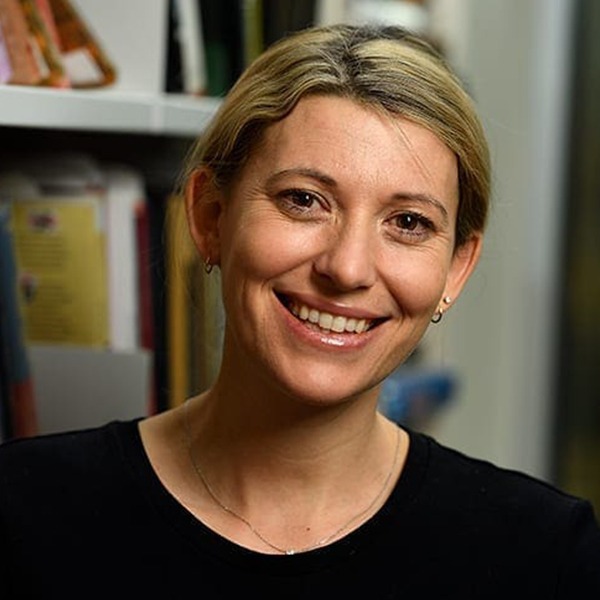
Alice Mandell
Assistant Professor, Department of Near Eastern Studies
Johns Hopkins University
Ph.D., University of California, Los Angeles
E-mail: amandel5@jhu.edu
Faculty Website
Alice Mandell is an Assistant Professor and the William Foxwell Albright Chair of Biblical and Ancient Near Eastern Studies. Her research focuses on ancient Levantine scripts, written languages, and texts, spanning the second and first millennia BCE. Alice’s book Canaanite Scribal Creativity and the Making of Cuneiform Culture in the Amarna Age (in print Nov. 2025) analyzes the visual, material, linguistic, and rhetorical strategies used by Canaanite scribes to write to the Egyptian court in the Amarna Period (the mid-14th century BCE).
Alice also has several ongoing projects that examine alphabet-based literacy practices in the ancient Levant. From 2020 to 2021, she was awarded a Getty Research Initiative grant for research on the early alphabet. This work laid the foundation for her “craft-literacy” approach, outlined in A. Mandell, “Word Craft in the Ancient Levant: Craft-Literacy as the Intersection of Specialized Knowledge” Maarav 27 (2023), 91–191). She has published several articles that examine the literacy practices involved in text-making in craft production (e.g., JBL 2022). Her second book project, Alphabetic Word Craft: Levantine Craft Communities and their Literacies, examines the evidence for the literacy practices involved in object making in the second and early first millennia BCE. This research has won three awards: a Johns Hopkins University Catalyst award; a National Endowment for the Humanities award; and the Fredson Bowers Memorial Prize awarded by the Society for Textual Scholarship.
Alice Mandell
Assistant Professor, Department of Near Eastern Studies
Johns Hopkins University
Ph.D., University of California, Los Angeles
E-mail: amandel5@jhu.edu
Faculty Website
Alice Mandell is an Assistant Professor and the William Foxwell Albright Chair of Biblical and Ancient Near Eastern Studies. Her research focuses on ancient Levantine scripts, written languages, and texts, spanning the second and first millennia BCE. Alice’s book Canaanite Scribal Creativity and the Making of Cuneiform Culture in the Amarna Age (in print Nov. 2025) analyzes the visual, material, linguistic, and rhetorical strategies used by Canaanite scribes to write to the Egyptian court in the Amarna Period (the mid-14th century BCE).
Alice also has several ongoing projects that examine alphabet-based literacy practices in the ancient Levant. From 2020 to 2021, she was awarded a Getty Research Initiative grant for research on the early alphabet. This work laid the foundation for her “craft-literacy” approach, outlined in A. Mandell, “Word Craft in the Ancient Levant: Craft-Literacy as the Intersection of Specialized Knowledge” Maarav 27 (2023), 91–191). She has published several articles that examine the literacy practices involved in text-making in craft production (e.g., JBL 2022). Her second book project, Alphabetic Word Craft: Levantine Craft Communities and their Literacies, examines the evidence for the literacy practices involved in object making in the second and early first millennia BCE. This research has won three awards: a Johns Hopkins University Catalyst award; a National Endowment for the Humanities award; and the Fredson Bowers Memorial Prize awarded by the Society for Textual Scholarship.
Alice Mandell
Assistant Professor, Department of Near Eastern Studies
Johns Hopkins University
Ph.D., University of California, Los Angeles
E-mail: amandel5@jhu.edu
Faculty Website
Alice Mandell is an Assistant Professor and the William Foxwell Albright Chair of Biblical and Ancient Near Eastern Studies. Her research focuses on ancient Levantine scripts, written languages, and texts, spanning the second and first millennia BCE. Alice’s book Canaanite Scribal Creativity and the Making of Cuneiform Culture in the Amarna Age (in print Nov. 2025) analyzes the visual, material, linguistic, and rhetorical strategies used by Canaanite scribes to write to the Egyptian court in the Amarna Period (the mid-14th century BCE).
Alice also has several ongoing projects that examine alphabet-based literacy practices in the ancient Levant. From 2020 to 2021, she was awarded a Getty Research Initiative grant for research on the early alphabet. This work laid the foundation for her “craft-literacy” approach, outlined in A. Mandell, “Word Craft in the Ancient Levant: Craft-Literacy as the Intersection of Specialized Knowledge” Maarav 27 (2023), 91–191). She has published several articles that examine the literacy practices involved in text-making in craft production (e.g., JBL 2022). Her second book project, Alphabetic Word Craft: Levantine Craft Communities and their Literacies, examines the evidence for the literacy practices involved in object making in the second and early first millennia BCE. This research has won three awards: a Johns Hopkins University Catalyst award; a National Endowment for the Humanities award; and the Fredson Bowers Memorial Prize awarded by the Society for Textual Scholarship.
Diego Javier Luis
Rohrbaugh Family Assistant Professor, Department of History
Ph.D., Brown University
E-mail: diego.luis@jhu.edu
Faculty Website
Personal Website
Diego Javier Luis specializes in colonial Latin American history with an emphasis on the Pacific World and Asia-Latin America connections. He is the author of The First Asians in the Americas: A Transpacific History, published by Harvard University Press. It is the first book to examine the full scope of free and enslaved Asian mobility to and through the Americas during the Manila galleon period (1565-1815). His second book-length project is in progress and entitled, Manila and Acapulco: A Tale of Two Cities in the Early Modern Black Pacific. It locates the two nodes of transpacific galleon trade as sites with visible, socially mobile Black populations that were fundamental to the rhythms of global trade and the development of social culture at these ports. His articles on these and other subjects have been published in The Americas, Ethnohistory, Journal of Colonialism and Colonial History, Rethinking History, The Conversation, Aeon, Smithsonian Folklife, and elsewhere.
